 Raising pre-seed
All work
Every product, engagement and study.
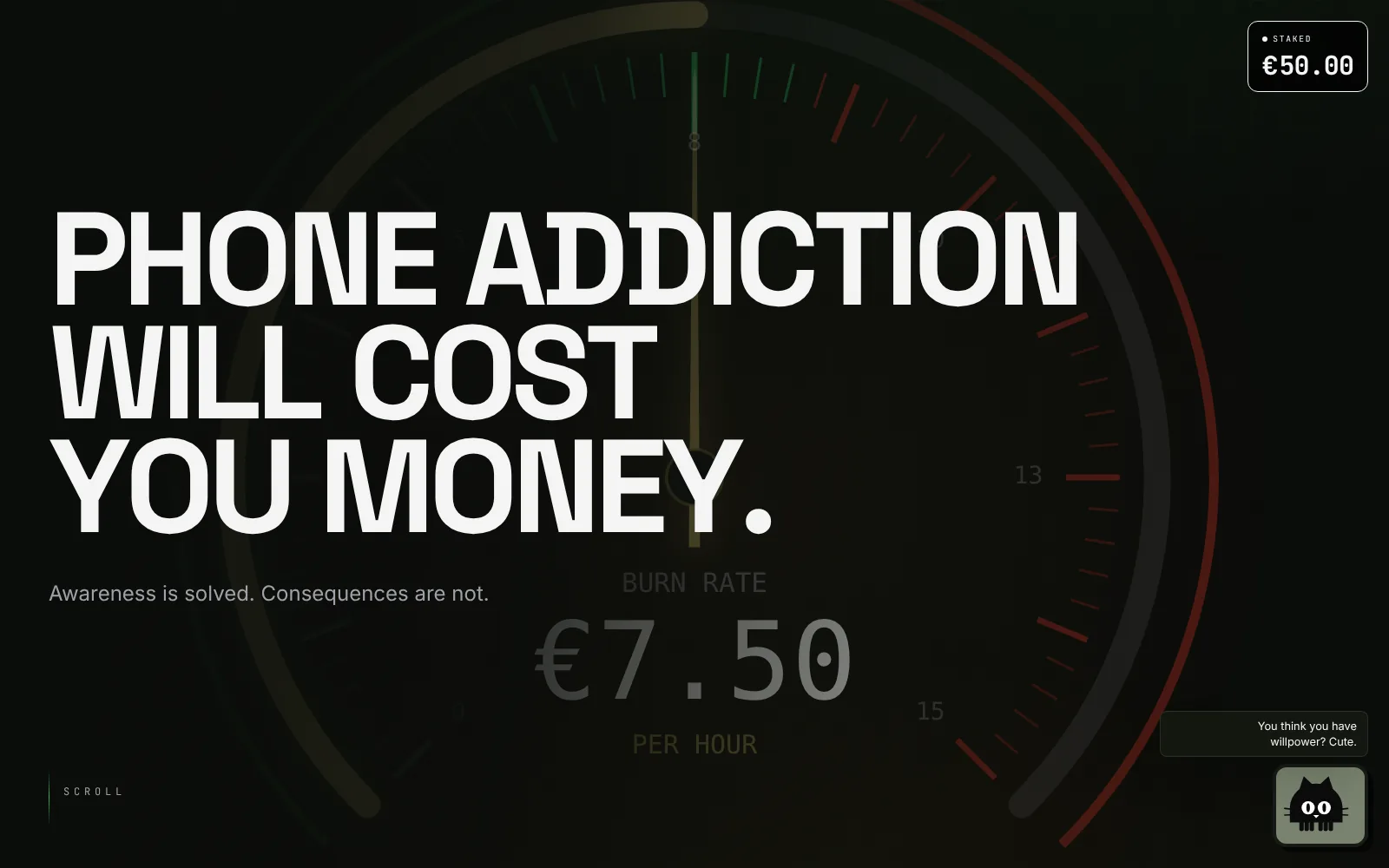
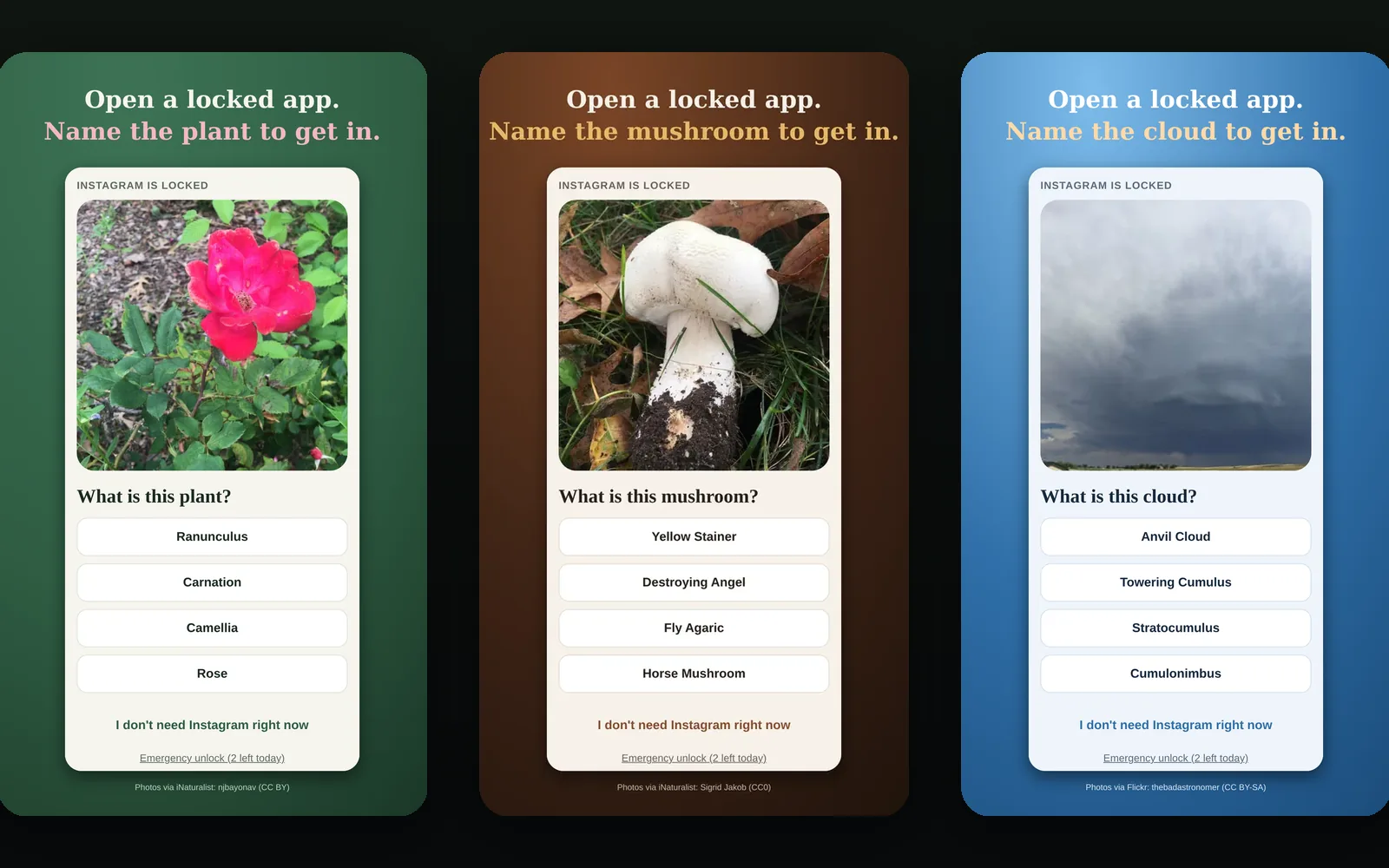
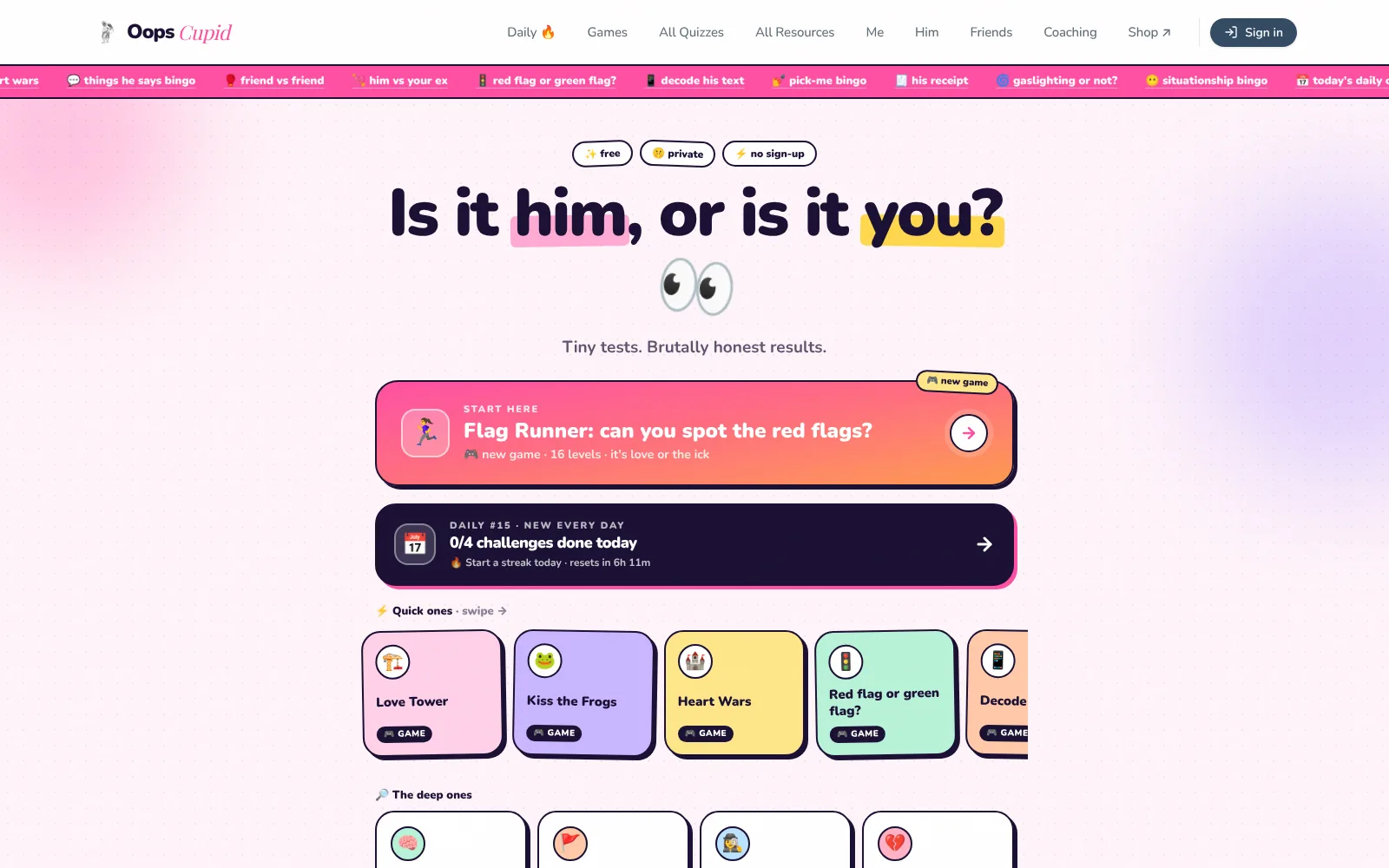
Real screenshots from the products. Each case study covers the problem, the psychology used, and the decisions behind the build.
Raising pre-seed02 / 05Consumer app · Live
FloraLock, ShroomLock & CloudLock
App lockers that teach you something instead of saying no
03 / 05Consumer app · Live
OopsCupid
Psychometric relationship assessments with an LLM profiling layer
04 / 05Consumer app · Pre-launch
DeBubble
Cozy self-care: a pixel room that grows as you step out of your bubble
05 / 05Media product · Live
The Daily Sublime
A 30-issue art-meditation email magazine designed for engagement signal

+ More work
- OptimoldsA consumer-psychology-driven B2B website and lead-generation funnelGrowth consulting
- RecallMateAI-assisted spaced repetition with conversational tutoringEdTech
- Workflow Automation Enginen8n + Pipedrive CRM automation with human-in-the-loop reviewB2B automation
- Daily HustleStructured idea-to-income programs with daily action stepsEdTech
- PasswayCurriculum-gap tracker built on a two-source data modelEdTech
- Dopamine BoxA behavioral experiment on betting: the Kelly criterion, near-misses and scarcityConsumer app
- MusicityMarket-fit and go-to-market strategy for a music platformConsulting
- Automated Interview Simulation StudyHow what candidates see on screen shapes their behaviorResearch
- PukytoonA feed of games anyone can make, share and playGame
Games
Small worlds for testing ideas about play.
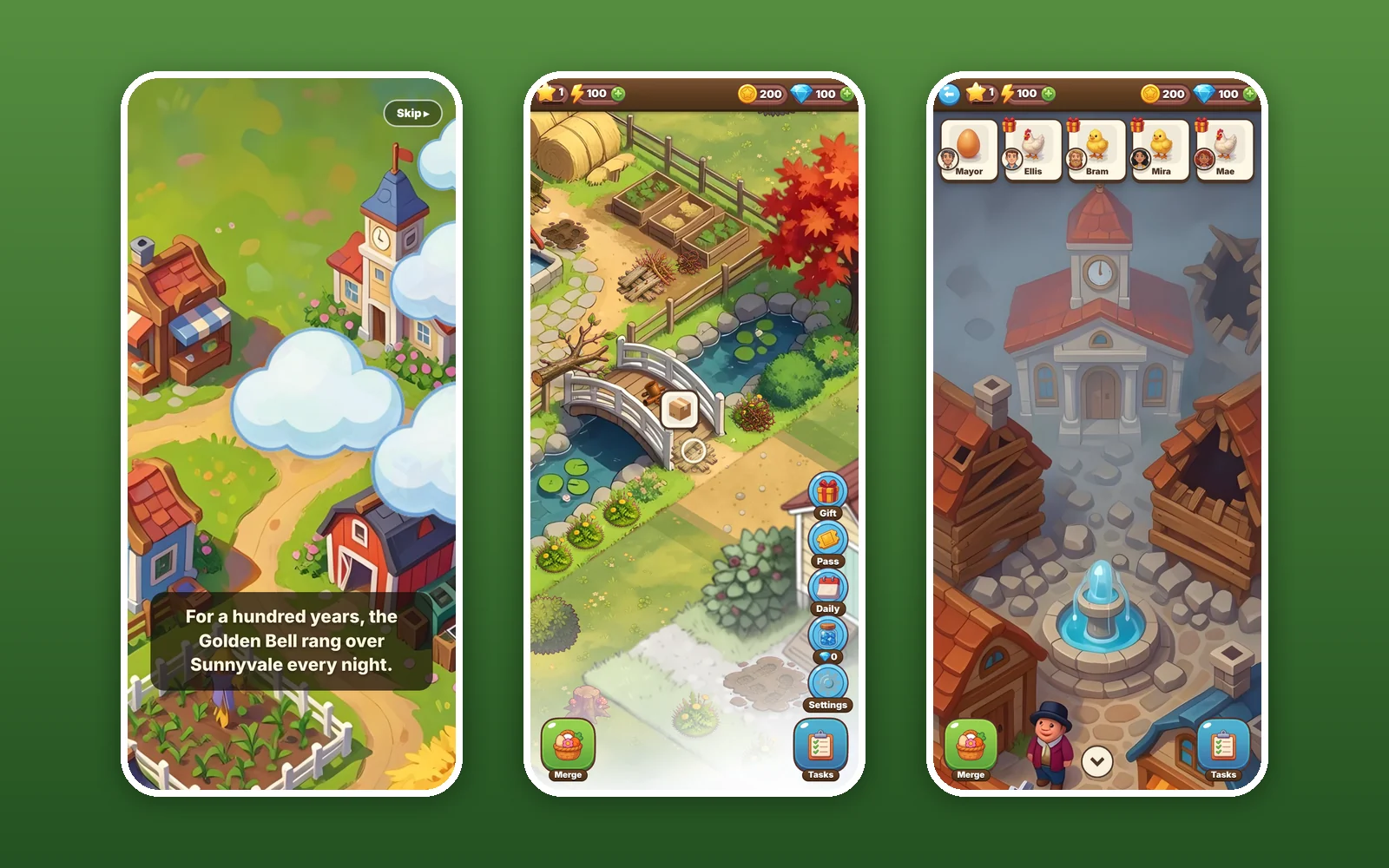
Merge games built around reward, choice and attention, a story game about AI and work, and a feed of games anyone can make, which I’m still building. All but the last play right here, in your browser.
Pre-launch5
Live300
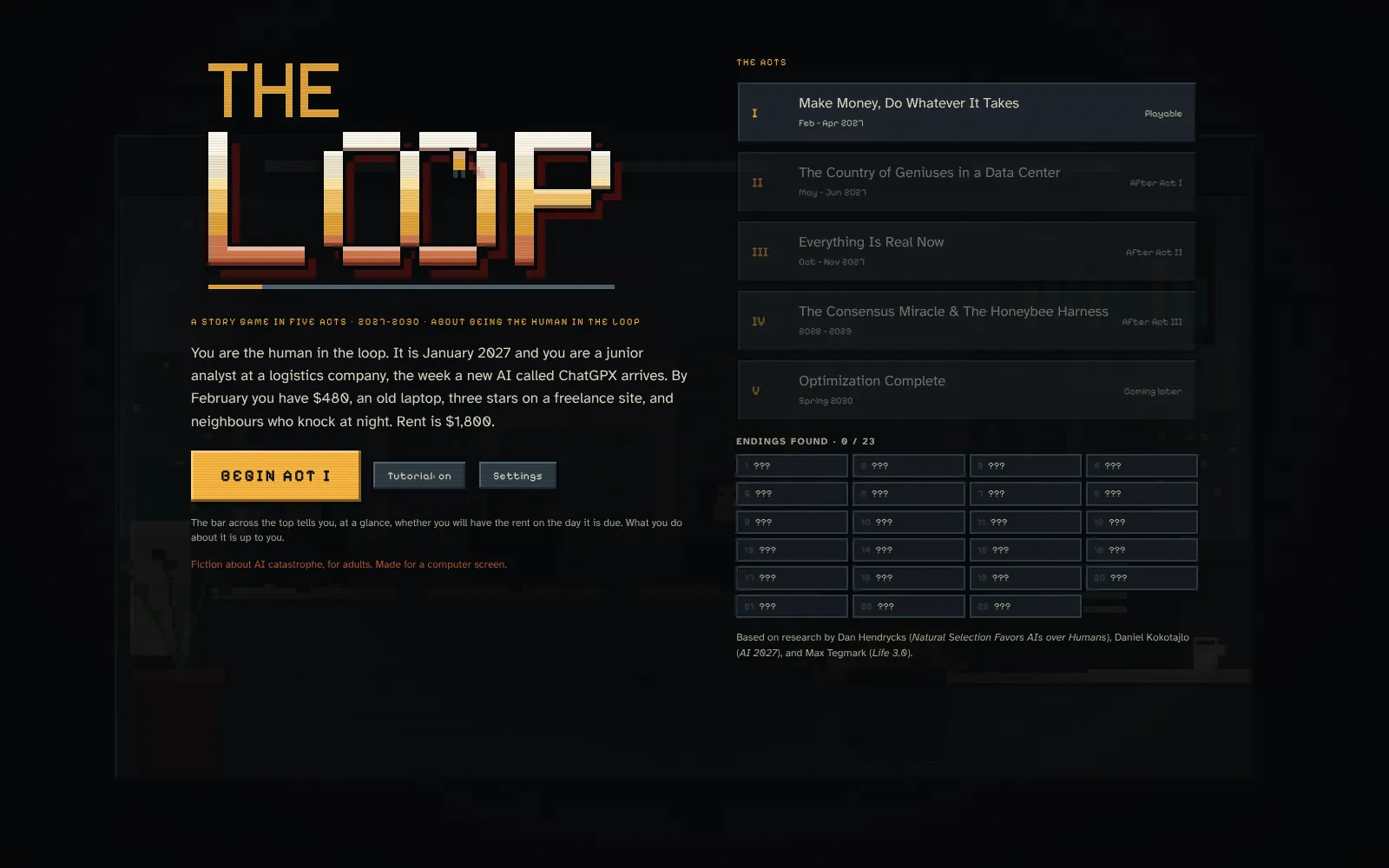
Playable4 acts
Live7–9
No install · always the newest version
4 games
play right here on sinadehesh.com — on a phone or a laptop.
Pukytoon · in development
A feed of games anyone can make.
Making videos became something everyone can do. I believe making games will go the same way — so I’m building the place where people make them, share them and play each other’s.
01 / 05Swipe
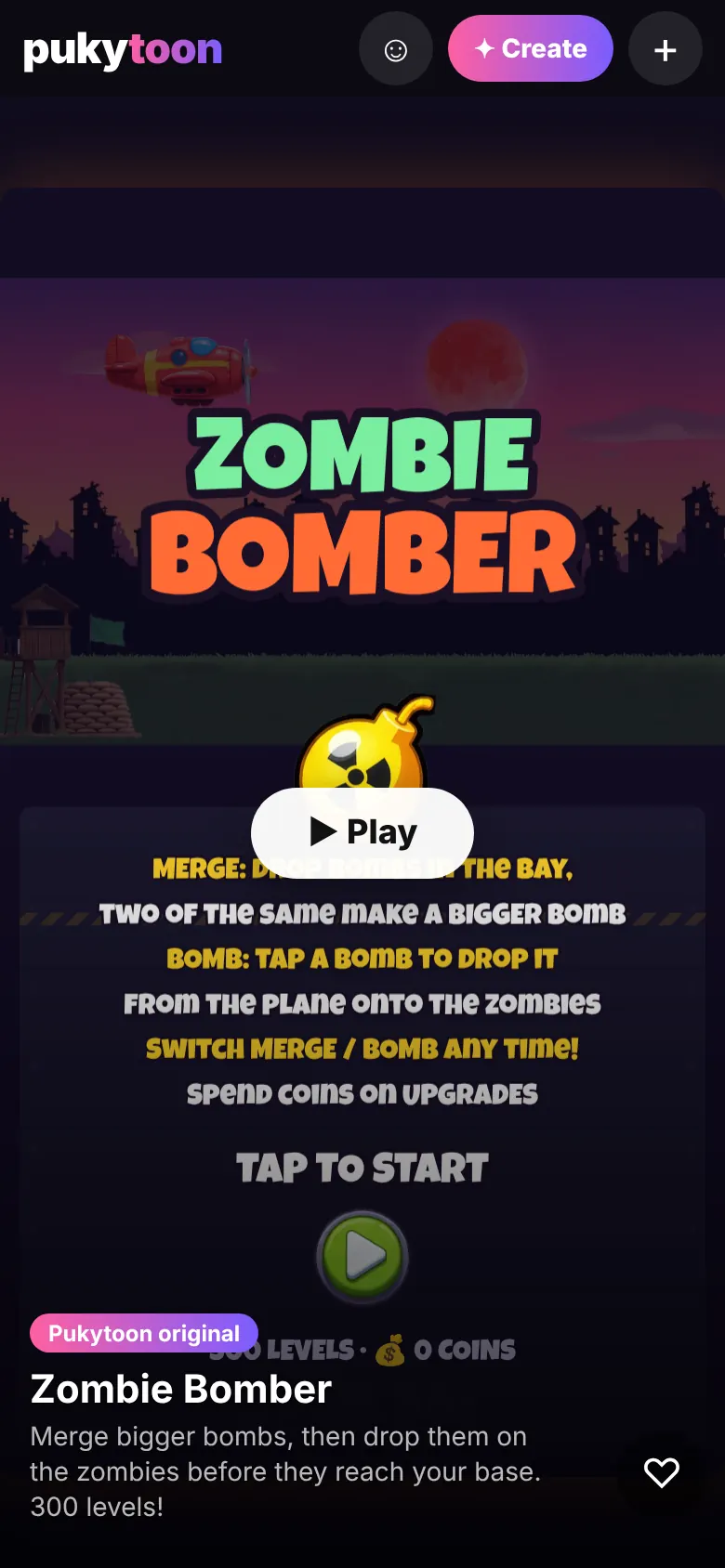
Games in a feed, like short videos.
One game per screen, snapping like a video feed. Tap Play and it takes the whole screen; swipe up and the next game is already waiting. Trying a game costs one swipe.
02 / 05Make
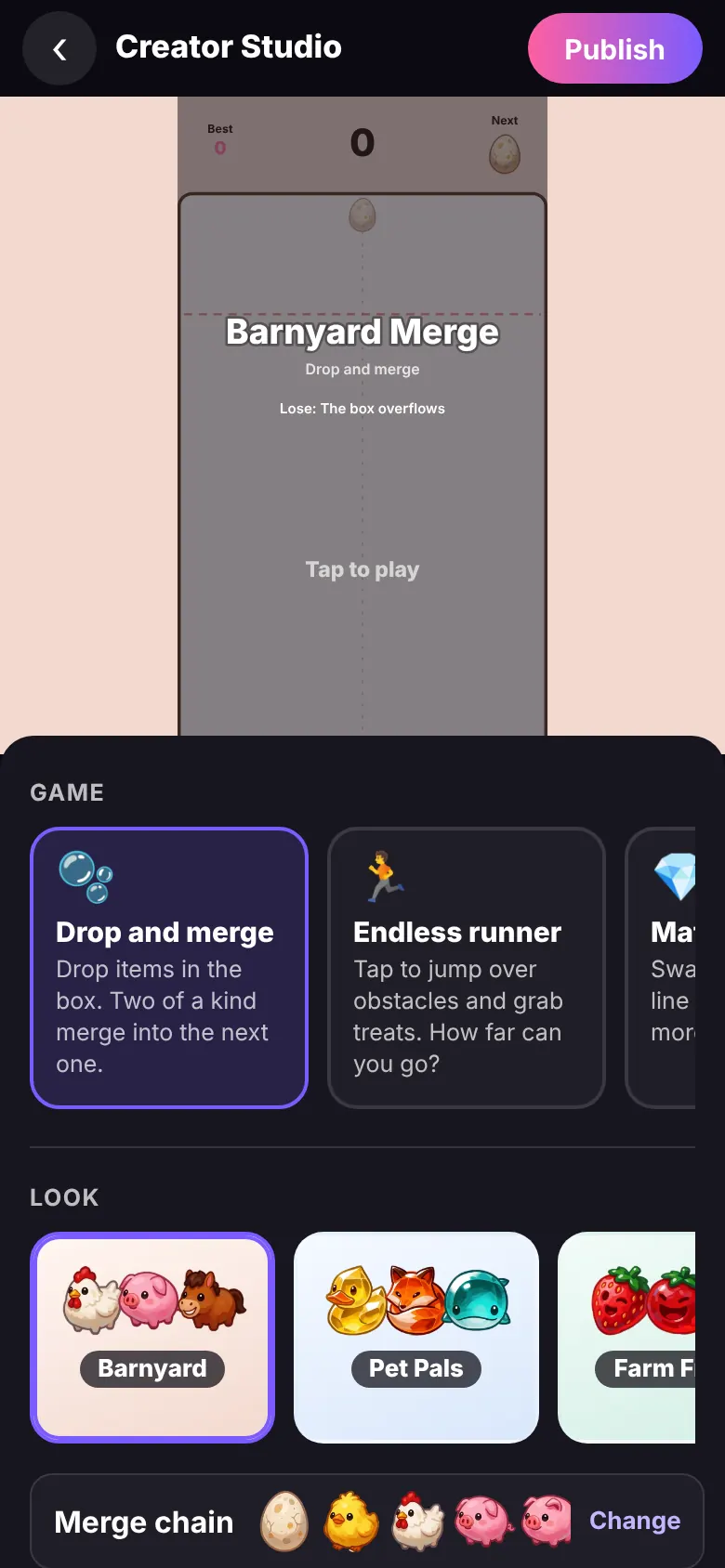
Make a game without writing code.
The Creator Studio: pick a game type — drop and merge, endless runner, match-3 or whack-a-mole — choose one of six looks, swap in any of 74 pictures and tune it while a live preview plays. That's hundreds of different games, from anyone.
03 / 05Rules
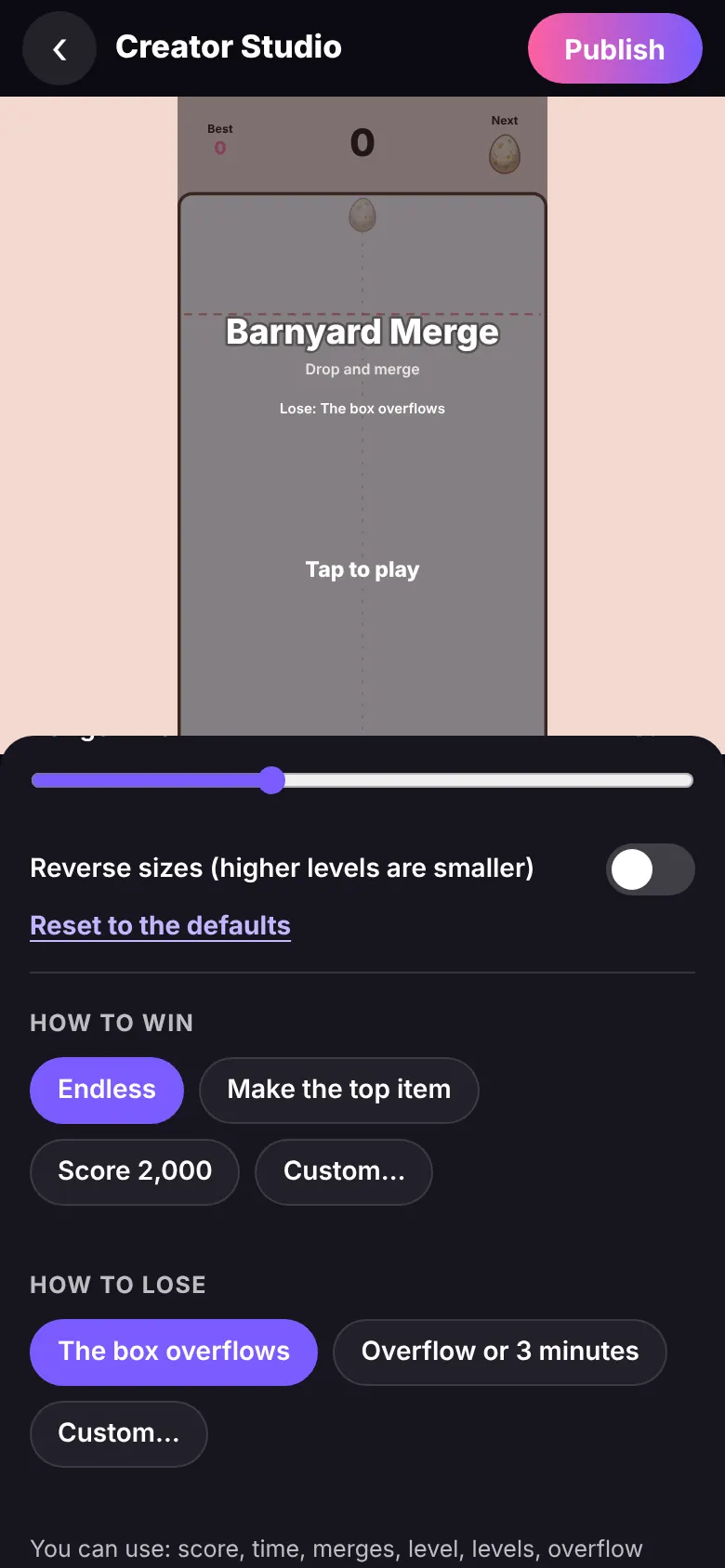
Decide how it’s won and lost.
Take a preset — make the top item, score 2,000, 25 moves — or write your own rule, like score ≥ 1000 or time ≥ 90, checked as you type. Publish, and the whole game is a few hundred bytes of data.
04 / 05Paste a link
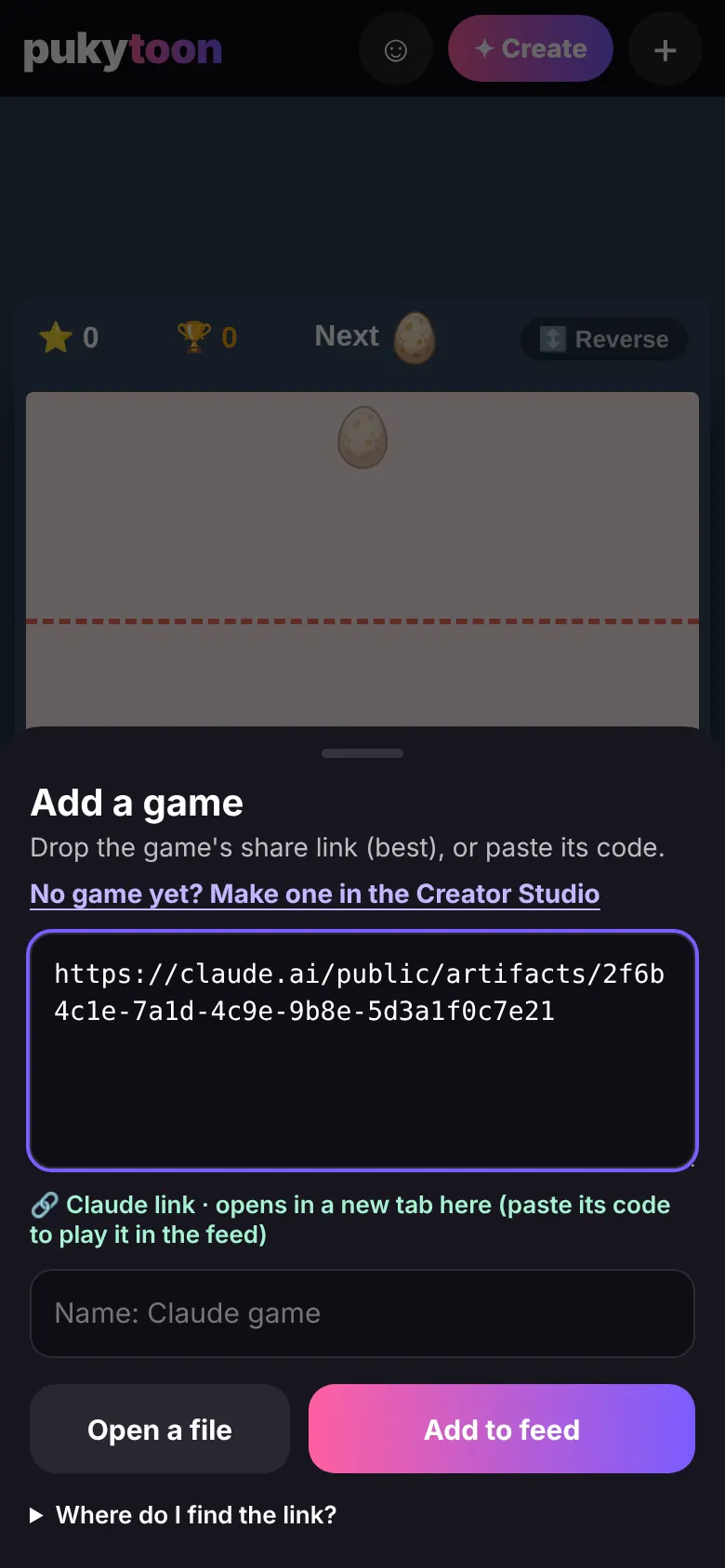
Made a game with Claude? Copy its link.
Built a game as a Claude artifact, or with Gemini or Kimi? Copy its share link and paste it in: Pukytoon recognizes it and it becomes a card in the feed. Paste the code instead and it plays right inside the feed.
05 / 05Share
Share it, like it, make your own version.
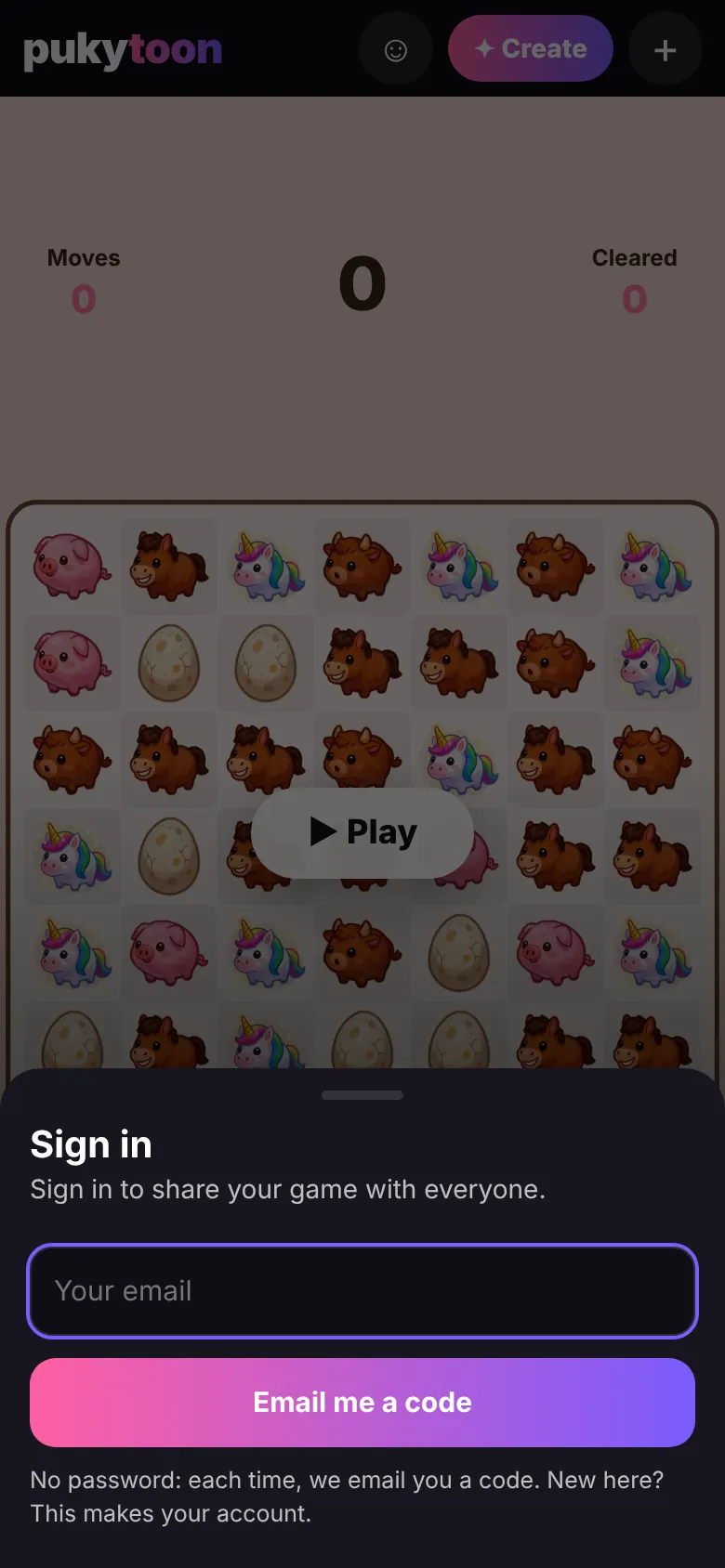
Sign in with just your email to share your games with everyone, like other people's and send any game to a friend with one link. Every shared game carries its maker's name and @handle, and anyone can make their own version of it. Following your favorite makers is coming next.
Why it matters
Everyone makes videos now. Next, everyone makes games.
Every medium opened up the same way. Writing, photos, music and video were once made by specialists for everyone else; then the tools got easy, a place to share appeared, and making became something people do for each other. Games are the last big medium still made mostly by specialists, because even a small game needs rules, pictures, sound and code.
AI has started to change that: anyone can describe a game to Claude, Gemini or Kimi and play it a minute later. But those games end at a share link nobody browses. What’s missing isn’t a better tool. It’s the social part: a feed where games get seen, and people who play them, answer them and make their own.
That’s why Pukytoon is built around people as much as games. When anyone can make a game, games become messages, gifts, jokes and replies — a new way for people to spend time together.
- 01
A game becomes a message
When a game takes minutes to make, you can make one for a single person: a birthday, an inside joke, a quiz only your class can pass. Its value is who made it and who it’s for, not how polished it is.
- 02
From player to maker, one small step at a time
In most communities, most people only watch. So every step is small: swipe to play, tap to like, share with one link, make your own version of someone’s game, then make one from scratch.
- 03
Remixing is how makers talk
Making your own version of someone’s game is a reply: I liked this, here’s mine. Starting from a game that already works is also the gentlest way to learn how games are made.
- 04
Credit travels with every game
Every shared game carries its maker’s name and @handle. Among makers, credit is the currency: it turns a copy into a conversation and a run of games into a reputation.
- 05
An audience is the reason to make a second game
Likes tell a maker that someone played and enjoyed their game. Following makers, which comes next, will gather each maker’s games in one place, so every new one reaches the people who liked the last.
- 06
Playing together, even apart
One link per game means a game travels through the group chats people already use. Playing a game a friend made is a way to spend time with them when you can’t be in the same place.
- 07
Games about everyone’s lives
When only studios make games, games reflect a narrow set of people and tastes. When anyone can make one, there can be games in every language, about every town, school and family.
- 08
Safety keeps the room open
Beginners only share when they trust the room. Every pasted game runs sealed off from the app and the other games, people can report and hide what they don’t want, and until the checks for shared code are ready, only Studio games and Claude, Gemini or Kimi links can be shared with everyone.
Still in development · not open to play yet
Want to know more about Pukytoon, or to fund it? Email me.
(Contact)
Customers doing something you can’t explain? Let’s find out why.
[email protected]
Based in Milan, Italy · Available in Milan, Turin, across Europe and remotely · English, Italian, Persian, German · LinkedIn