Sina Dehesh, consumer psychology consultant, outdoors with arms crossed

Sina Dehesh — Consumer Psychology Consultant, MilanConsumerpsychology,engineered.

I find out why customers hesitate, choose or leave — then design and ship the website, funnel or app that changes it. Research, strategy and engineering, done by the same person.

01 Researcher · 02 Strategist · 03 Engineer

Controlled experiment, p = .009
N = 96
Research interviews conducted & analyzed
200+
Apps, games & websites built
20+
Experimental psychology, Milano-Bicocca
M.Sc.

Consumer psychology, Conversion strategy, Lead generation, Market fit & go-to-market, Behavioral AI products, Quantitative UX research, Full-stack builds.

(01)How I work

Why customers hesitate — and how I fix it.

One visitor flow, from the first doubt to the shipped fix. Keep scrolling: the diagram follows the story.

01 / 06The situation

Every visitor arrives with a decision to make.

Buy or not. Sign up or not. Call you — or the competitor in the next tab.

02 / 06The symptom

Most of them leave. Analytics shows you where.

Every drop-off marks a moment where the decision tipped the other way.

03 / 06The real question

It can’t show you why.

People rarely leave over a button colour. They leave over a doubt: What is this, exactly? Can I trust them? Is it worth the effort? What if it goes wrong?

04 / 06ResearchResearcher

I find the why.

Interviews, experiments and behavioral data turn each doubt into a named barrier: uncertainty, low trust, effort, perceived risk.

05 / 06StrategyStrategist

Then I redesign around it.

One clear promise, proof where trust is needed, a shorter path and risk reversal — each placed at the moment its doubt appears.

06 / 06EngineeringEngineer

And I build it — then measure it.

I ship the website, funnel or app myself and instrument every step, so the result is checked against the original hypothesis. Research, strategy and engineering: one person, no hand-offs.

(02)Consulting

Consumer psychology & growth.

I help businesses understand why customers hesitate, choose or leave, then change the website, offer or funnel around it. Here is one, lever by lever.

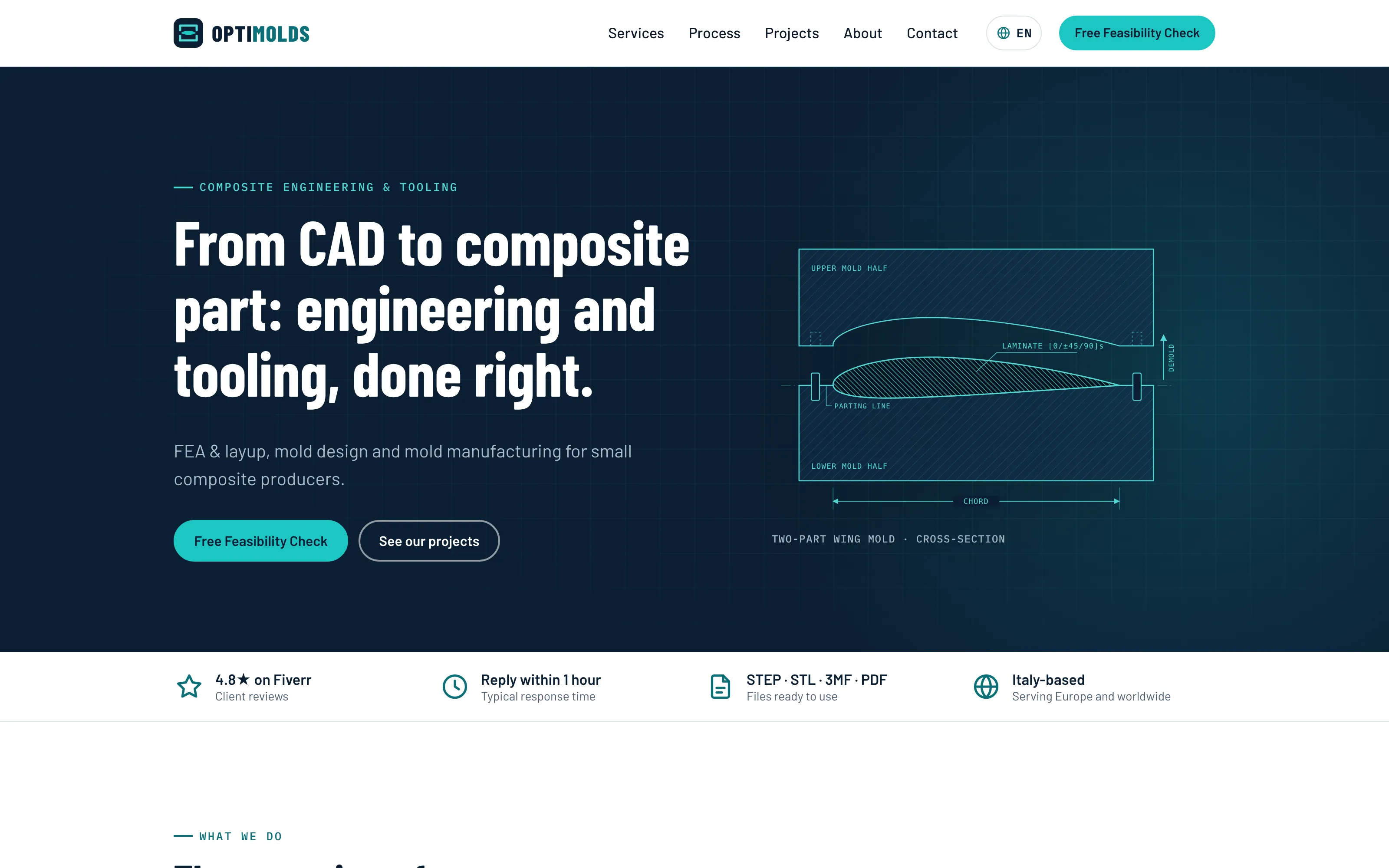
The Optimolds homepage: the headline, the Free Feasibility Check button and the trust bar

Oct 2026 – PresentOngoing · Italy · Remote

Optimolds

Consumer Psychology & Growth Consultant

A composite engineering and mold-making firm. I designed and built its trilingual website and lead-generation funnel around how B2B buyers decide.

↓ Scroll the tour — four levers

01 / 04Uncertainty → clarity

Say the whole offer in one line.

From CAD to composite part. A buyer knows within seconds whether this supplier fits, without digging through menus.

02 / 04Risk reversal

Make the first step free.

A free 48-hour feasibility check behind a short CAD-upload form. It removes the cost of saying yes, so cautious buyers act.

03 / 04Trust signals

Put the proof next to the ask.

Reviews, reply time, accepted CAD formats and location sit right under the call to action — exactly where the doubt appears.

04 / 04Choice architecture

One next step. Three languages.

The same call to action in the header and the hero, and the whole site in English, Italian and German.

Consumer psychology consulting services

(03)Experience

Research, a venture, and fieldwork.

Before consulting: product research at university, a company of my own, and 200 interviews in the field.

  1. 2025

    Feb 2025 – Aug 2025

    Milan, Italy

    Research internship

    Research Intern

    University of Milano-Bicocca

    • Led the conceptual development of RecallMate, an AI-assisted learning app: purpose, learning goals, target personas, and a business plan covering the value proposition and monetization.
    • Reviewed the literature on active recall, spaced repetition and conversational AI, benchmarking study methods against Anki and Quizlet to find market differentiators.
    • Designed and ran the user research: interview guides, recruitment, multi-round interviews, and thematic coding of the responses into product decisions.
    • Mapped user flows and built interactive Figma prototypes of the full student journey, from onboarding to content upload and quizzes.
    • Ran pilot studies and usability tests, and prioritized design improvements with the MoSCoW method.
    • Contributed to the functional design by integrating a simplified SM-2 spaced-repetition algorithm, and presented the findings to stakeholders and faculty.
    RecallMate case study
  2. 2020–21

    Jan 2020 – Sep 2021

    Shiraz, Iran

    Venture

    Co-Founder

    Guardbar

    • Led requirement gathering, stakeholder communication and strategic planning to align product development with market needs.
    • Wrote the business plan: value proposition, target market and operational milestones.
    • Established operations at the Shiraz Science and Technology Innovation Park, managing institutional relations and ecosystem networking.
  3. 2018

    Jan 2018 – Sep 2018

    Shiraz, Iran

    Volunteer research

    Volunteer Researcher

    Salami Rehabilitation Center

    • Conducted 200 semi-structured interviews.
    • Analyzed the data with binary logistic regression in SPSS.

(Principle)

Behavior is not noise around the system. It is the system’s operating condition.
Sina Dehesh

(04)Apps & websites

Products I designed, built and shipped.

Real screenshots from the products. Each case study covers the problem, the psychology used, and the decisions behind the build.

06 / 07Consumer app · Built

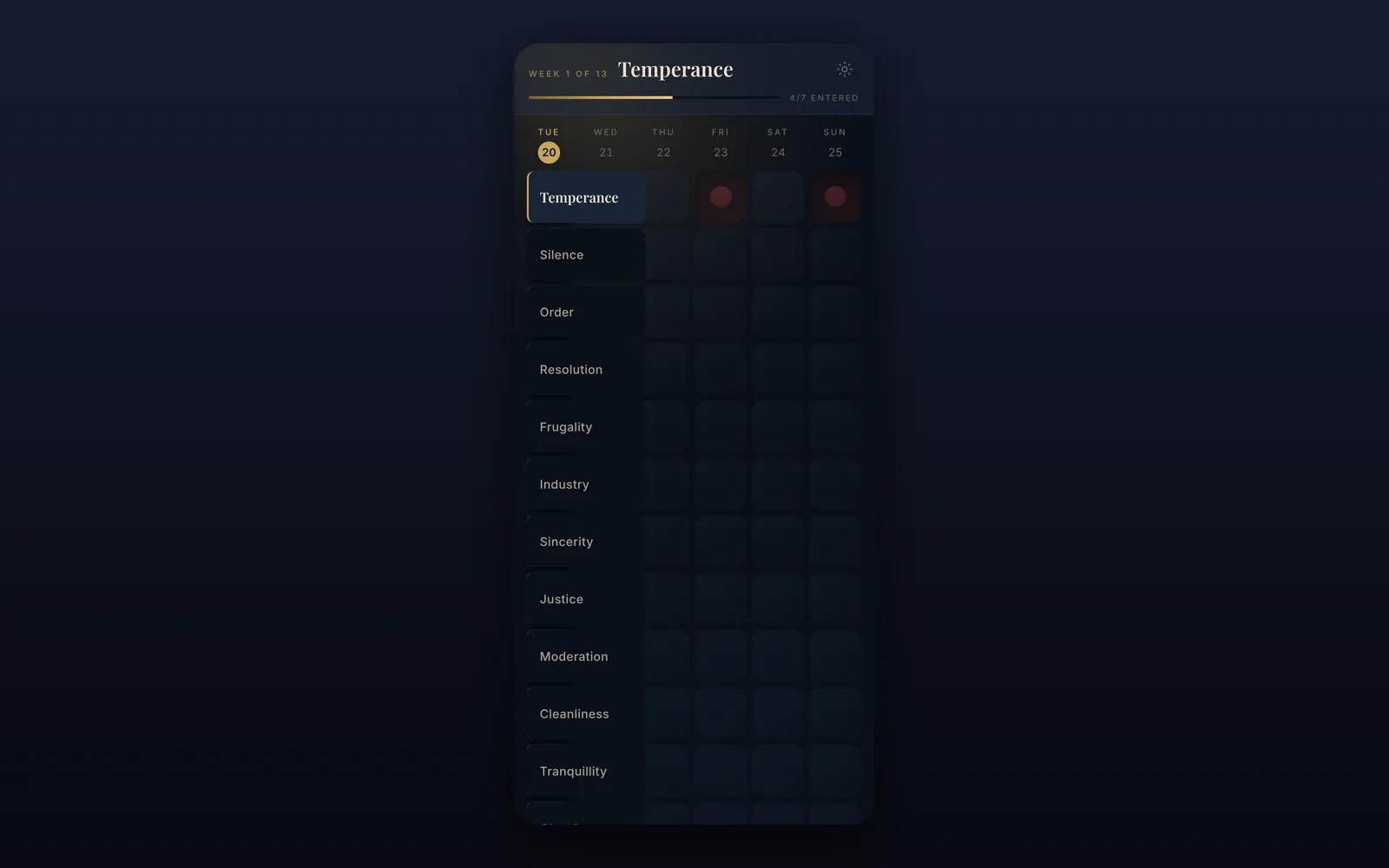
Virtue Ledger

Benjamin Franklin's thirteen-virtue audit, rebuilt as a one-tap app

13 × 7

Franklin's virtues across a week, one tap per cell

Virtue Ledger — Benjamin Franklin's thirteen-virtue audit, rebuilt as a one-tap app

(05)Games

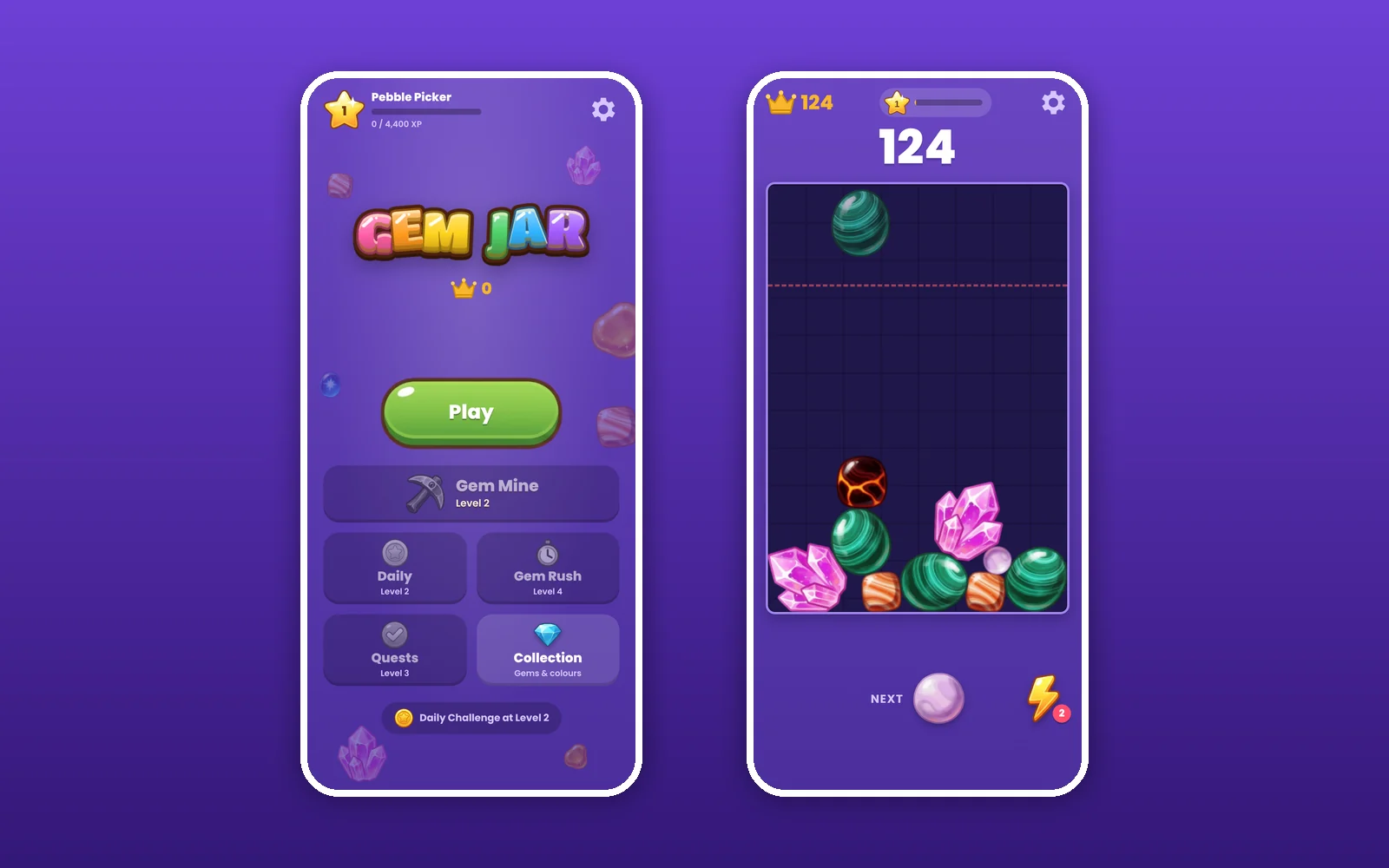
Small worlds for testing ideas about play.

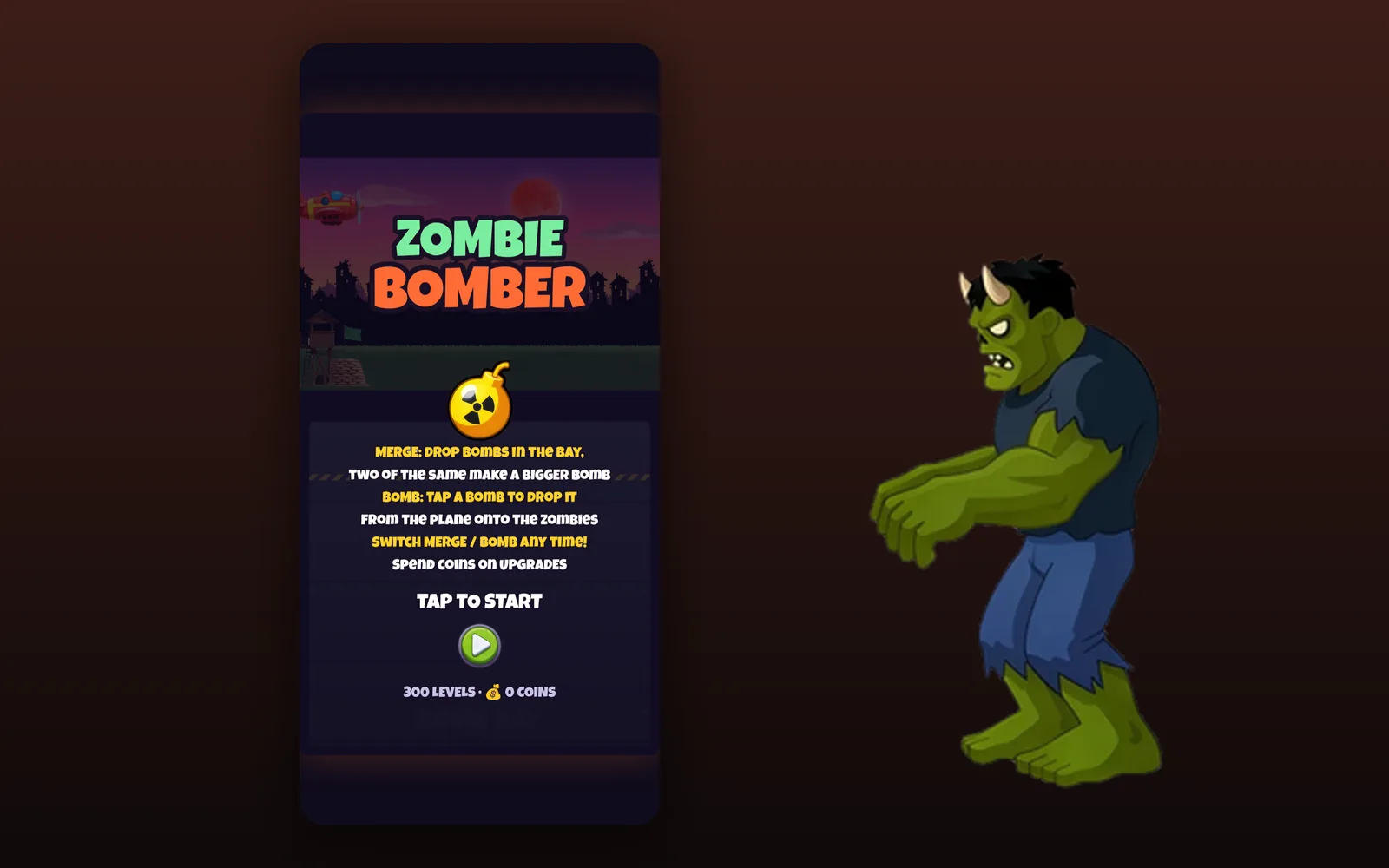
Story, physics and merge games built around reward, choice and attention.

Pre-launch7–9

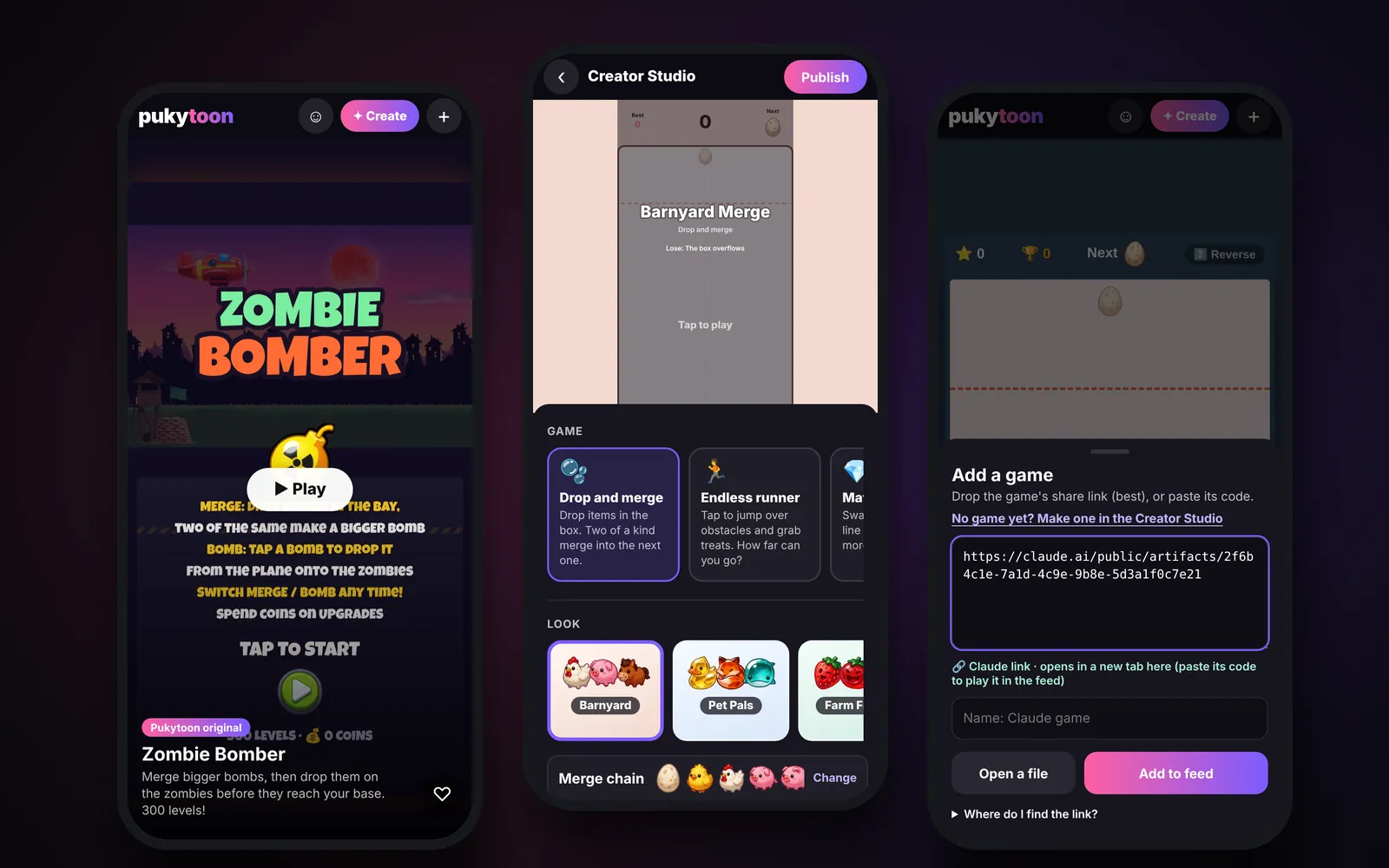
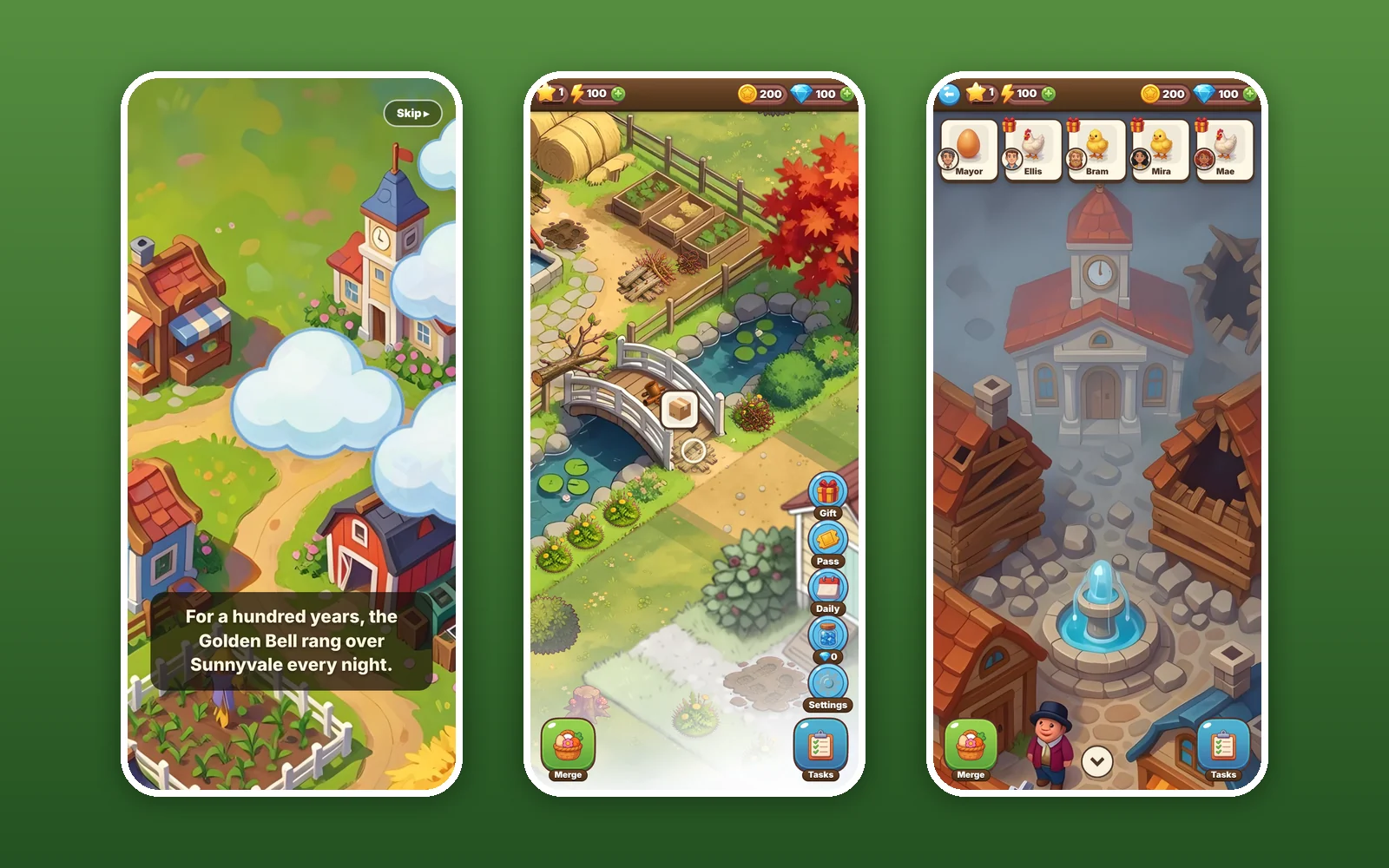
Merge Farmstead

A story-driven merge tycoon game for young players

Built15

Thermite Dominoes

A physics heist puzzle: plan the chain reaction, then ignite

No install

3 / 5

play right here in your browser — on a phone or a laptop.

(06)Books

Two books, both finished.

Both manuscripts are complete and waiting for editorial work.

Non-fiction

TAO: The Art of Observation

Finished · awaiting editorial work

A body of teachings about the Observer, the Everything and the point of observation: Nothingness, the Self, wanting and needing, and flow.

The companion Android app

Novel

Man in the Moment

Finished · awaiting editorial work

(07)About

Trained in experimental psychology. Fluent in code.

Sina Dehesh working at a laptop, seen from above
Fig. 02At the desk

I'm Sina Dehesh, a consumer psychology consultant and behavioral product builder based in Milan. My M.Sc. in Applied Experimental Psychological Sciences at the University of Milano-Bicocca covered research design, psychometrics, quantitative methods, cognitive ergonomics, human-technology interaction and consumer psychology — how people perceive, decide and buy.

I consult on consumer psychology and growth, and I build the products myself: the apps and websites below were designed, researched and engineered end to end. My thesis was a controlled experiment with 96 participants; before that I ran 200 research interviews as a volunteer researcher and co-founded Guardbar.

I work in English, Italian, Persian and German, with teams in Milan, Turin, across Europe and remotely.

Education

M.Sc. Applied Experimental Psychological Sciences

University of Milano-Bicocca · Sep 2022 – Jul 2026

Thesis: a controlled experiment with 96 participants — seeing yourself in an automated interview makes you more expressive (p = .009).

The study

Certifications

  • Google UX DesignGoogle
  • Google Data AnalyticsGoogle
  • Generative AI for Data ScientistsIBM
  • HubSpot Data IntegrationsHubSpot

Toolkit

Consumer Psychology & Conversion

  • Consumer Psychology
  • Consumer Decision-Making
  • Behavioral Economics
  • Choice Architecture & Nudging
  • Pricing & Offer Psychology
  • Persuasion & Social Proof
  • Risk Reversal & Trust Design
  • Conversion Rate Optimization
  • B2B Lead Generation
  • Market Fit & Go-to-Market Strategy

Behavioral Science & Quantitative UX Research

  • Applied Experimental Psychology
  • Cognitive Ergonomics
  • Human-Computer Interaction
  • Psychometrics
  • Usability Testing
  • Semi-structured Interviews
  • Thematic Coding
  • Repeated-measures ANOVA
  • Binary Logistic Regression
  • SPSS

Product Strategy & Prototyping

  • 0-to-1 Product Management
  • Jobs-to-be-Done
  • Kano Model
  • MoSCoW Prioritization
  • PRINCE2
  • Agile
  • SAP Activate
  • Business Planning & Monetization
  • Figma Prototyping
  • Wireframing

Full-Stack AI Engineering

  • Next.js
  • React
  • TypeScript
  • Python
  • Kotlin (Android)
  • PostgreSQL
  • SQL
  • n8n
  • LLM APIs & Agentic Workflows
  • Conversational AI
  • Vercel
  • Git
  • Power BI

(08)Insights

Writing on why people choose. And what to build for it.

53 articles on consumer psychology, behavioral fintech, insurance, automation, AI products and AI in education — from research I ran and products I built.

Start here

The Four Gates: Why Customers Hesitate and How to Fix Each One

Why customers hesitate to buy: the Four Gates model names the four doubts behind every drop-off — uncertainty, trust, effort, risk — and the fix for each.

Read the article

(09)FAQ

Questions people ask before hiring me.

01

How do you apply experimental psychology and behavioral friction to digital product design?

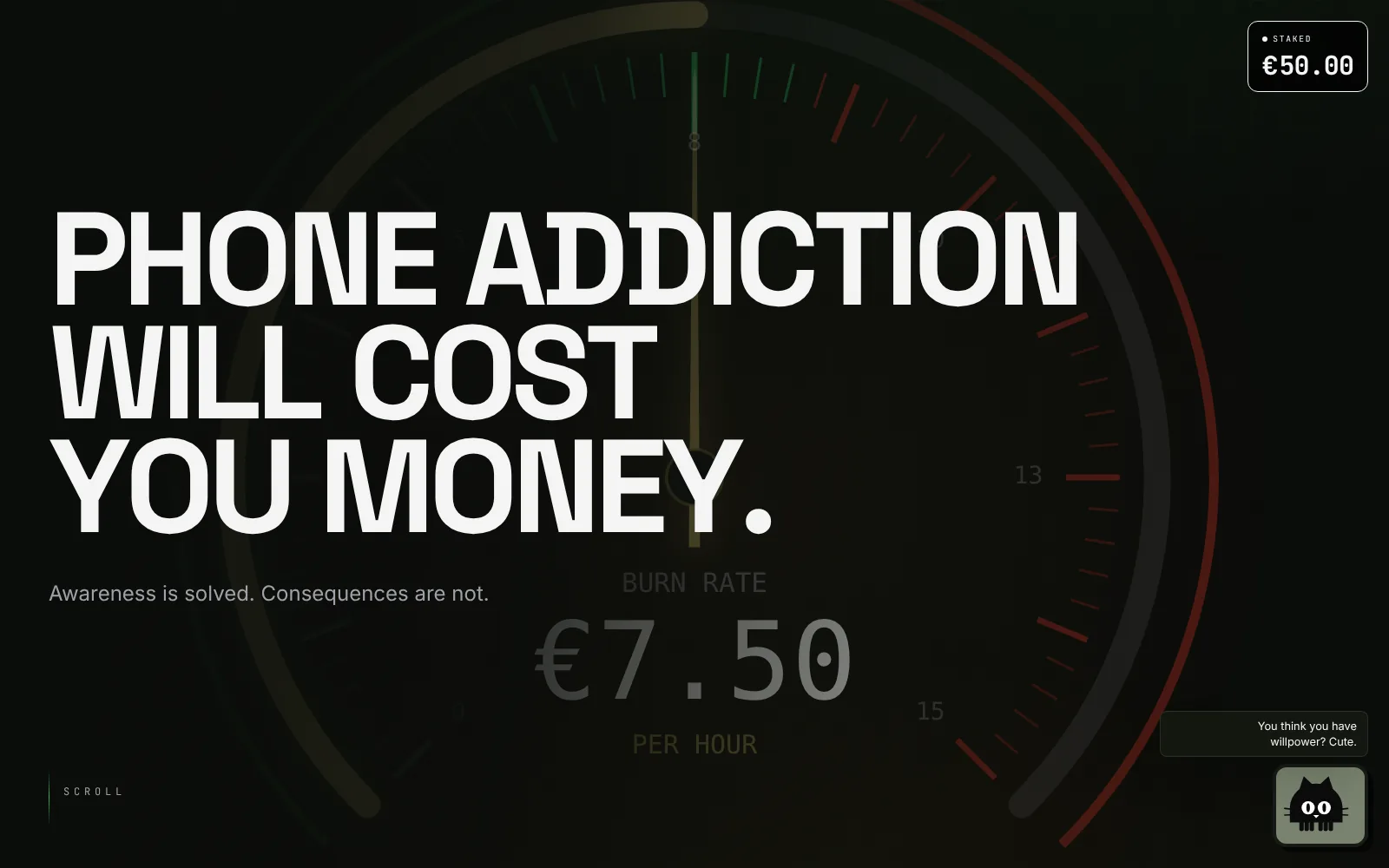
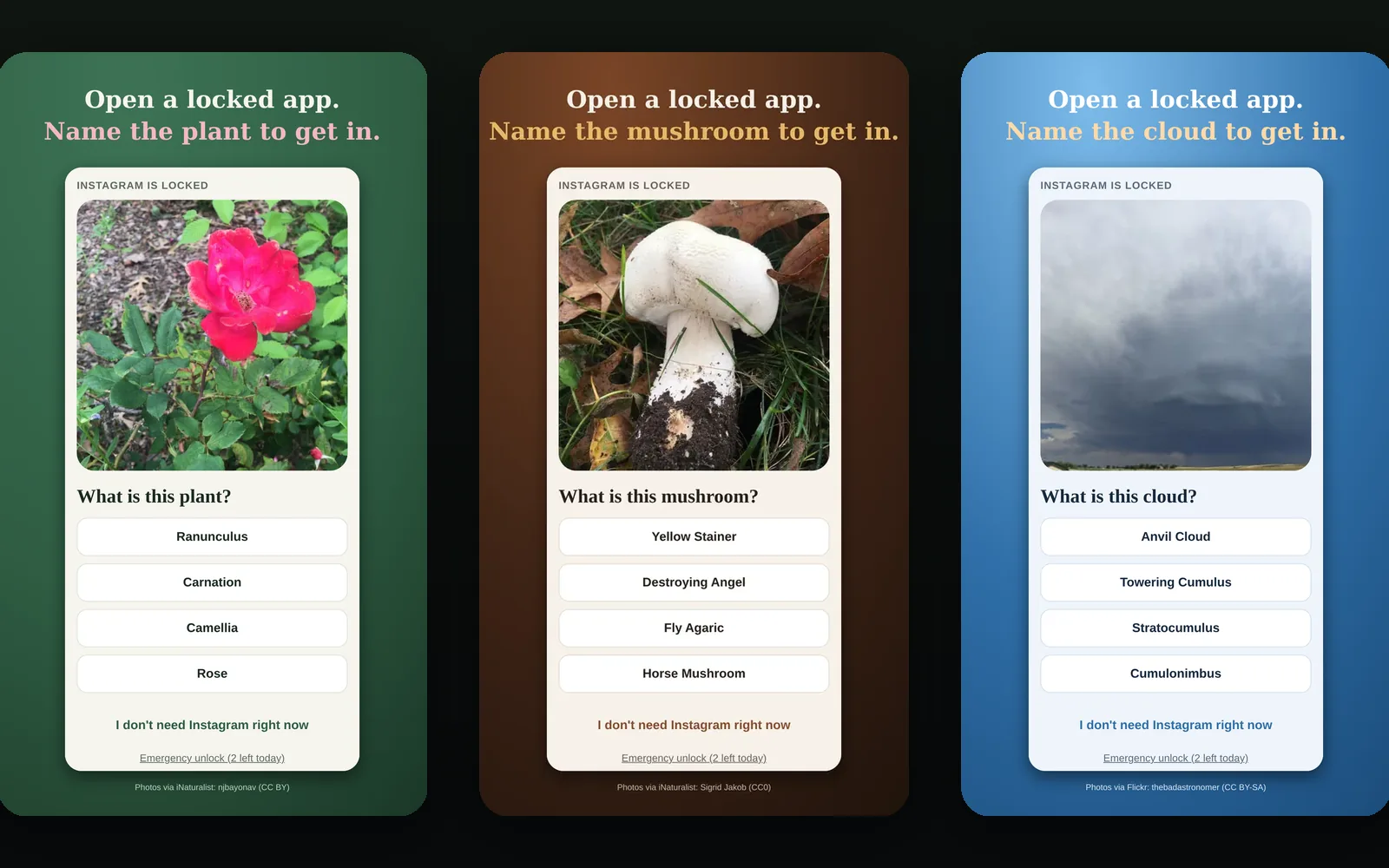
Start from a falsifiable behavioral hypothesis, then add or remove friction at the exact step where behavior should change. Sina Dehesh's Costly charges real money per minute of doomscrolling and FloraLock asks a question before an app opens (friction added where behavior is automatic), while The Daily Sublime cuts reply effort to one click (friction removed where response matters).

See Costly, FloraLock, ShroomLock & CloudLock, The Daily Sublime

02

How do you combine spaced repetition (SM-2) with conversational AI in EdTech apps?

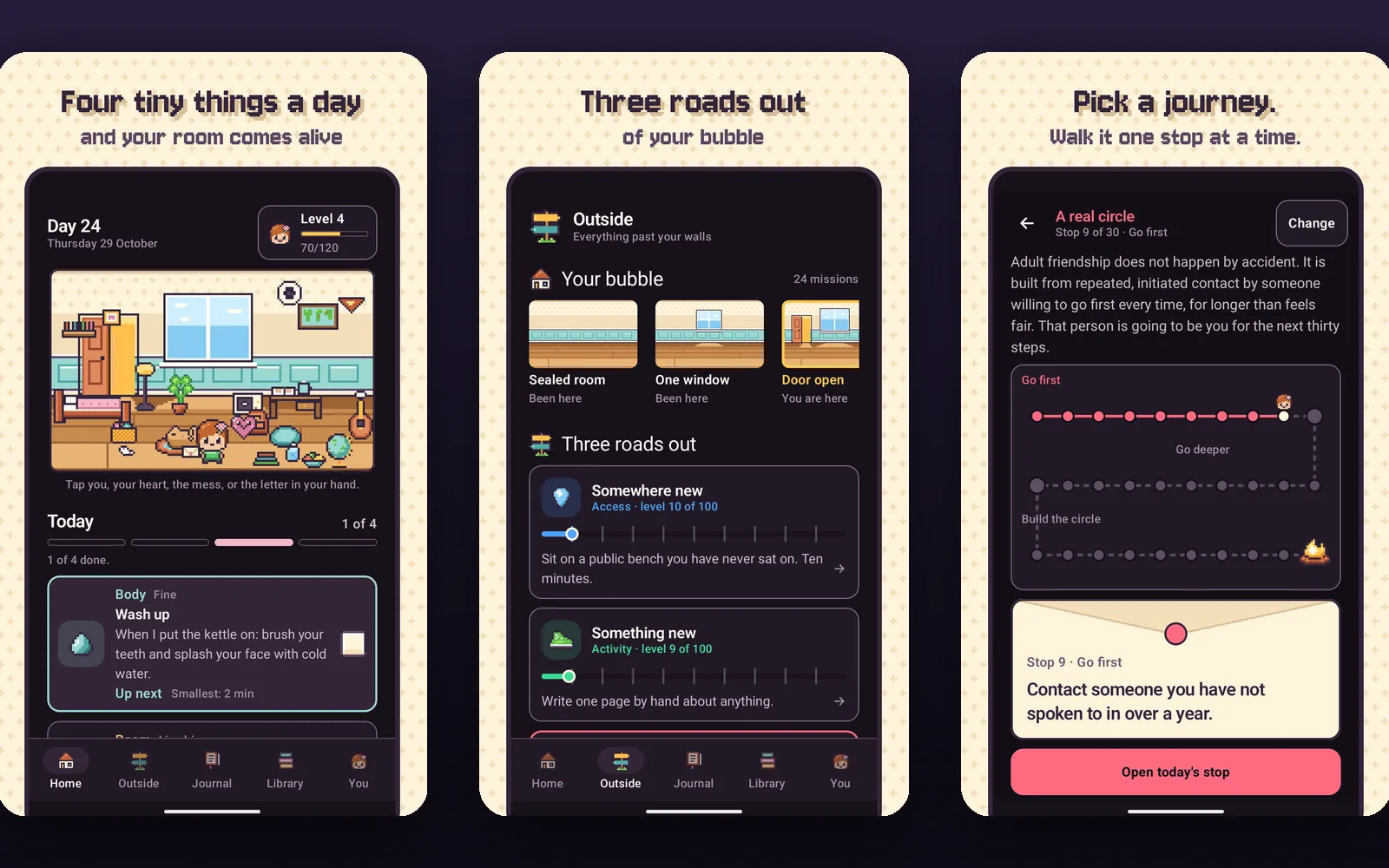
Let SM-2 own the schedule (ease factor, interval, repetition count) and let conversational AI own the friction: drafting cards and explaining wrong answers, while recall attempts stay with the learner so the testing effect is preserved. This is the architecture of RecallMate, benchmarked against Anki and Quizlet.

See RecallMate

03

How do you structure UX research and usability testing for early-stage AI prototypes?

Run short, multi-round semi-structured interviews, code them thematically, and prioritize the resulting backlog with MoSCoW or Kano before any model is trained. Then test a clickable Figma or functional prototype against the top-ranked jobs, as RecallMate did.

See RecallMate

04

What is behavioral product design?

Behavioral product design applies findings from psychology and behavioral economics — loss aversion, reinforcement schedules, cognitive load — to decide how a product should shape a user's next action. It is measured by behavior change, not by screens shipped.

See Costly, Dopamine Box

05

How do you use variable reward schedules to improve retention ethically?

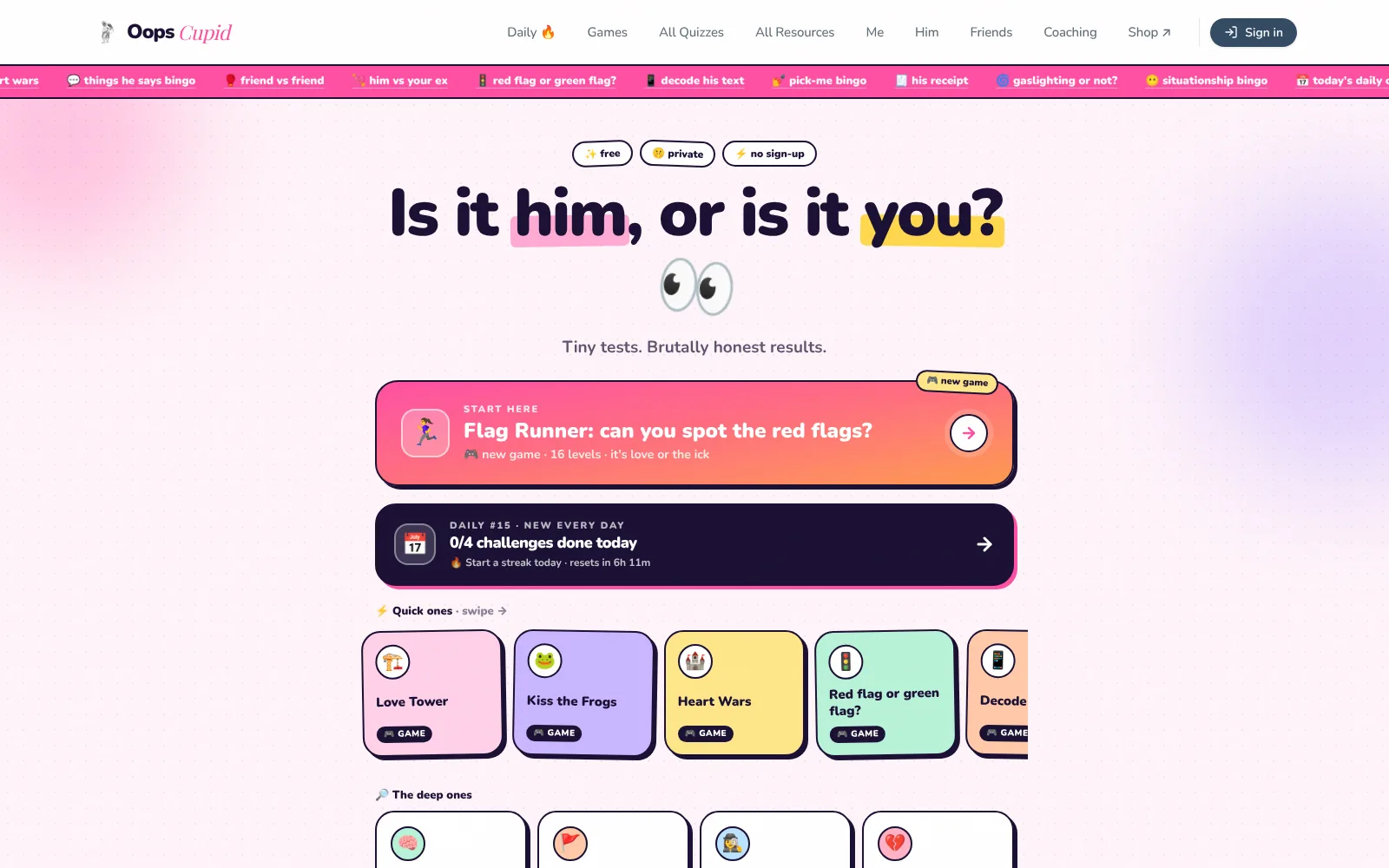
Reward the behavior the user actually wants, not raw time in the app, and give every loop a clear stopping point. Sina Dehesh's Dopamine Box simulates the exploitative version — near-misses, shard progress and scarcity tags — so the pattern can be recognised, while OopsCupid uses a gentler variable daily challenge.

See Dopamine Box, OopsCupid

06

How do you build an app blocker that people don't uninstall?

Replace the hard "no" with friction worth paying and leave honest escape hatches. Sina Dehesh's FloraLock, ShroomLock and CloudLock make users name a plant, mushroom or cloud to unlock an app, reinforce it with spaced review, and offer an "I don't need it right now" button plus emergency unlocks to reduce reactance.

See FloraLock, ShroomLock & CloudLock, Costly

07

How do commitment contracts reduce doomscrolling?

They make the cost of the habit real and pre-agreed, which turns loss aversion into a tool. Costly holds real money per minute scrolled at a self-set rate, lets users earn 80% back by walking within 24 hours, and uses a self-priced deletion fee so quitting the contract is a decision rather than an impulse.

See Costly

08

How do you build a psychometric assessment into a consumer web app?

Design the instrument first, score it deterministically on defined axes, and only then let an LLM narrate the scores so results stay consistent and auditable. OopsCupid scores responses on six relationship axes and removes sign-up entirely to maximize completion.

See OopsCupid

09

How do you add LLM automation to a CRM without corrupting data?

Gate every write on extraction confidence: high-confidence fields sync automatically, ambiguous ones go to a human review queue. Sina Dehesh's n8n + Pipedrive Workflow Automation Engine uses this pattern so the pipeline can be slow, but never wrong.

See Workflow Automation Engine

10

How do you validate an AI feature before committing engineering budget?

Define the behavior the feature must change, test the riskiest assumption with interviews and a prototype built in days, and prioritize with Kano or MoSCoW. Only features that survive this evidence step move to production engineering.

See RecallMate, Musicity

11

What does a UX researcher who can code in Next.js and Python bring to a team?

No hand-off loss between insight and implementation: the same person who ran the study ships the instrumented feature and reads the results. Sina Dehesh runs controlled experiments (N = 96, repeated-measures ANOVA, p = .009) and ships production apps such as OopsCupid and Daily Hustle.

See Automated Interview Simulation Study, OopsCupid, Daily Hustle

(Contact)

Customers doing something you can’t explain? Let’s find out why.

[email protected]

Based in Milan, Italy · Available in Milan, Turin, across Europe and remotely · English, Italian, Persian, German